
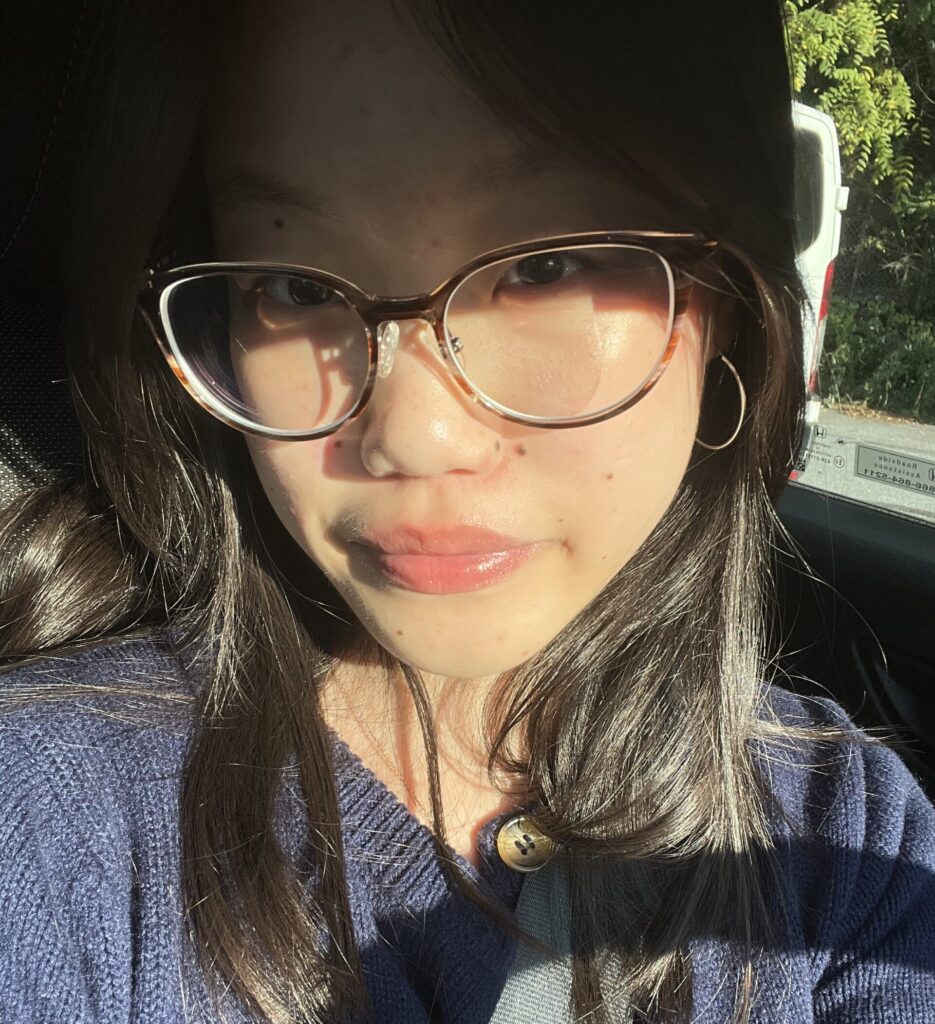
There is something special in the bustling of life that passes through our ears, weaving itself through the spaces between our minds—sounds we all hear, yet take in so differently. I think of my six-hour long playlists during car rides with my mother, the loud humming of the kitchen fume hood in my White suburban home, and the chatter of students in my high school cafeteria creating feelings of isolation within me. Living in twenty-first century America means to live with constant noises surrounding us. Yet, the voices of East Asian (EA) women too often slip away into the background, barely existent, forcing us to live under oppression:
We must not be loud.
We must not draw attention to ourselves.
We must be invisible.
Representation of EA women in the United States has failed to make our community feel seen and heard because where we are not underrepresented, we are misrepresented. It is important to note the distinction between these three terms: representation, underrepresentation, and misrepresentation. Representation is when the distinct experiences of certain groups are highlighted across a variety of forms including media (written or broadcasted) and any occupational roles they may hold in society (e.g. in policy or science). Underrepresentation is when the opposite occurs; it is a lack of representation, where certain groups are not visible in their society’s narrative, which undercuts their presence and real contributions. Similarly, misrepresentation is also a lack of proper representation, but instead of cutting out certain roles, misrepresentation is the inauthentic twisting of certain groups’ experiences and identities, often done to fit societal ideals and expectations. The status quo must change in order for EA women to regain our voices in a society that pushes us towards the margins through underrepresentation and misrepresentation.
Societal margins in America are not tangibly visible, but another margin is: the edge line of road shoulders I ride over in car rides with my mother. Zooming past trees, accompanied by silence, I make it twenty minutes in before I am pelted with this urge to play my six-hour long “everything” playlist. Light-hearted summer tunes leave me to my daydreams, until a melancholic one sneaks its way in and prods at me to chew on its lyrics: “You’re the sun, you’ve never seen the night / But you hear its song from the morning birds…” (Mitski).
In this piece, “Your Best American Girl,” Japanese-American singer-songwriter Mitski portrays the feelings of a minority woman in a relationship with a White man, highlighting the pressure to conform under societal expectations of who she should be. The White man is the “sun,” occupying an important status in society because the world revolves around the sun. The “night” represents the woman of color who has never been seen because when night arrives, most people are asleep, oblivious to who she really is. The sun, amongst the oblivious, chooses to listen to the “morning birds” instead, “birds” that do not directly see the “night.” Thus, what they say about her is inaccurate, allegorizing the Western media and its inaccurate portrayal of minority women which the White population chooses to believe. A popular example is the geishas in Arthur Golden’s novel and Rob Marshall’s later film adaptation of Memoirs Of A Geisha, who are sexualized and implied to be prostitutes despite their respected role in Japan (Akita).
Misrepresentation is often due to incorrect and misguided beliefs that strengthen with each media retelling of the same harmful narrative. In A Room of One’s Own, Virginia Woolf notes how often men write about women, with “no…qualification save they are not women” (27). These writings argue women are impoverished due to our smaller brains, lack of hair, and longer life spans (29). While none of these arguments rang true, men continued to publish widely about women through the early twentieth century, creating a cycle of false narratives both men and women read and believed. Though Woolf gave these speeches almost a century ago, her message persists into the twenty-first century. When the media perpetuates narratives of how a certain group acts, this shapes societal expectations, harming individuals with the pressure to change in order to conform to these warped standards.
For EA women, these negative impacts are only half our problem, because in addition to being marginalized as women, we also have to live in a country that clings to harmful Asian stereotypes. The “model minority” myth puts Asians on a pedestal as a point of comparison for other minority groups, painting us as successful in academic, economic, financial, and societal spheres (“The Model Minority”). While this myth pits minority groups against each other, the “goody-two-shoes” role is not the only stereotype of Asians in Western media. Others include objectifying EA women as “exotic” and fetishizing us to be hyper-sexual, as well as presenting East Asian men as eccentric or socially-inept for comedic effect (Venkatraman). An example of the former is Suzie Wong from The World Of Suzie Wong (1960), while Long Duk Dong from 16 Candles (1984) embodies the latter. These inaccurate portrayals in media worsen social identity threats and drive lower self-esteem for minority groups (Block and Schmader). Misrepresentation is harmful not just for East Asians who are incorrectly portrayed in the media, but also for anyone unfamiliar with who we are because it leads them to believe in who we are not.
And so misrepresentation is like the loud humming of the kitchen fume hood in my family’s White suburban home. It gives off this grating noise that overshadows our voices, yet the smell of vegetable stir fry remains, prompting me to remember my family’s old kitchen fume hoods, the ones that were built into NYC Chinatown homes. The ones that actually work when we cook our cultural dishes. For minority families living in White-dominant neighborhoods, often designed with only the White American lifestyle in mind, we are frequently reminded that we do not fully belong.
And thus, we fade into the background. This unfortunate reality rings especially true for EA women because we are already expected to be submissive, docile, and obedient under the Western world’s narrative. Our lack of authentic representation is further exacerbated by the underrepresentation of EA women, most problematically in our classrooms today and throughout history.
In my experience with the U.S. K-12 curriculum, EA history was rarely touched upon, much less history centered on EA women. The only fragments of EA history I learned in my Pennsylvania public school were limited to my ninth grade American History course, where we briefly learned of Japan’s role in World War II, Japanese internment camps, the Korean War, the Vietnam War, the Chinese Exclusion Act, and Wong Kim Ark’s Birthright Citizenship case. All of these segments of Asian American history leaned heavily into the American side of that past, excluding holistic details about my ethnic background before our history was marred by the influence of America.
Following that one semester of American History, my school did not have EA history courses to offer. While disappointing, this is not surprising: as of August 2025, across all fifty U.S. states, only twenty-six states require an ethnic studies curriculum and only thirteen require an Asian American curriculum (“More Students”). Furthermore, the College Board, despite having courses for U.S. History, European History, and African American Studies, offers no Advanced Placement courses in East Asian or Asian history (“AP Courses”). EA history deserves to be recognized under its own spotlight and should be more accessible in K-12 classrooms across the country. The cultural histories of the immigrants who built this nation are valuable and deserve representation.
The issue of underrepresentation of EA women is not confined to our modern-day classrooms; over the years, it has been a historical fact. In general, women have faced barriers when it comes to writing and publishing. Virginia Woolf affirmed this tradition in 1928, writing that women who “publish something with her name to it…risk being thought a monster” (58). During her time, the literature world was seemingly dominated by men, with women writers opting for male pseudonyms in order to be published. And if White women, Woolf’s primary audience, had trouble publishing, it was an even more difficult feat for EA women or any woman of color. Progress has been made in the writing and publishing field for EA women, but there is still a long way to go for true equity. Cathy Park Hong describes her thoughts on being an Asian poet in her book Minor Feelings: “I just don’t look the part” (7). Not only are East Asians’ literary works perceived before they are even read, but when publishing opportunities are available, Asian writers are expected to write about Asian experiences—ones that fit the narrative. As Hong writes, “Publishers treated the ethnic story as the ‘single story’” (47).
How many literary works by Asian Americans can you name? How different are their stories? There is a shortage of EA writers being published in the Western world. Would-be writers are often discouraged from the humanities due to a lack of opportunity and cultural pressure. And even for those that do pursue creative writing, they are encouraged to write about an Asian experience that may not be true to them in order to be published. Being an Asian writer means you will never be separated from your work—your writing will always be analyzed and perceived with your ethnic identity in mind. And while seeing Asian American authors on the shelves can be inspiring for aspiring Asian writers, reading the same story over and over perpetuates a cycle where we must ignore our authentic experiences in order to mold a packaged narrative that appeals to White society. Thus, we lose the ability to connect with our own communities over realities we often share.
To break this cycle, we must look to the existence of Woolf’s A Room of One’s Own and Hong’s Minor Feelings. Woolf’s speeches urge women to break the long-standing normalcy that equated men with writing, while Hong’s essays create a distinct record of the Asian American experience that has never been told. For EA women, both works serve as a reminder that even in a world where we are swept to the margins, underrepresented and misrepresented, one voice speaking the truth can usher in a new age where we can demand proper representation.
Fortunately, there are growing examples of EA representation done well that we ought to learn from moving forward. Hong’s Minor Feelings is a start, but other notable works I recommend include Dictée by Theresa Hak Kyung Cha (as Hong highlights), Yellowface by R. F. Kuang, Crying in H Mart by Michelle Zauner, Everything Everywhere All at Once (2022) directed by Daniel Kwan and Daniel Scheinert, and Dìdi (2024) directed by Sean Wang. These works push us to reflect on our notions of East Asians and bring to the surface an honest account of our hardships, both historically and in the present day. They were also all produced by East Asians who knew personally of the authentic EA experience, who opted to share one that was not carefully packaged for the comfort of the White American. In order to make proper representation a more concrete reality, the film and publishing industries must seek out Asians during the creative and production processes for such related Asian characters or Asian-centered films. As Hong explains, “speak nearby, rather than speak about…hence leaving a gap…allow[ing] the other person to come in and fill that space as they wish” (103). To properly represent EA women in America, the creative industries must include us in conversations and actually listen.
But when it comes to minority representation, history professor Mark Lilla of Columbia University would disagree. In a 2016 New York Times Opinion column he argued “the laziest story in American journalism [is] about the ‘first X to do Y’” and that ultimately, “National politics…is about commonality.” But in heavily emphasizing the need for unity amongst all Americans, Professor Lilla underestimates the actions needed to make this collective America a reality. Highlighting the successes of minority groups is essential because these are efforts towards equity and a reminder that we are working towards an America where no person of color (POC) is excluded. Steering American journalism away from celebrating POC achievements is a mistake—it maintains a status quo that has long disregarded minorities (POC and women) instead of including us in the narrative. A united America cannot stand without shining its spotlight onto minority groups, including EA women.
And though all Americans value similar things—good health, the happiness of our loved ones, and our unalienable rights—we do not share the same reality. Our realities are often different because of our identities. For EA women, we have to navigate both sexism and racism. Between March 2020 and March 2021, Stop AAPI Hate tracked that nearly sixty-eight percent of reported AAPI discrimination cases were targeted towards EA women (Jeung et al.). Furthermore, FBI reports found that AAPI hate crimes in 2024 were “the third highest” compared to all past years and “crime incidents [were] nearly three times higher than pre-pandemic averages” (Boykins). In a society where we are unjustly targeted because of false notions and their consequent hatred, we have to speak up. For far too long we have been watching untrue accounts of our lives. The spotlight American journalism gives minority groups is critical because it encourages proper representation: yes, people of color can succeed and positively contribute to American society. Yes, we belong, and despite all our hardships, we have persevered. This reminder becomes a hope for the future.
For minority groups today, proper representation is crucial. In a 2025 study, it was found that racial representation among university academic staff has “a positive impact on minority students’ academic outcomes” and “increase[s] minority students’ likelihood of further study” (Holford and Sen). Additionally in politics, another recent study finds a link between descriptive (how they look) and substantive (what they do) representation in the U.S. Congress, noting that Black legislators are more likely to sponsor bills addressing issues surrounding race than non-Black legislators (Garcia et al.). These studies suggest the importance of not only seeing yourself in positions of authority, but also how that sparks the beginning of advocacy in pivotal political roles. Much like how promotional ads push us to buy certain products and subscriptions, seeing ourselves in positions of power buys us the truth that we, too, deserve to be in these roles. Good representation serves as tangible proof, for EA women especially, that we have defied a society dominated by the patriarchy and xenophobia.
Thus, it is imperative we continue to both demand and create stories reflective of who we are. We must work towards a reality where the first films and books on EA women we reach for are not ones filled with misrepresentation (or worse, written by White men). We must leave future generations of the Western world with enough media to comb through, works where we exist and are not pushed to the sidelines. We must regain our voices by using them because the alternative would be to bottle up our “minor feelings”—something so familiar to me as I stood in my primarily White high school cafeteria. Despite the many voices blurring into one, it was impossible to feel true belonging. Because where I failed to see myself in the media, my surroundings only reaffirmed that reality. For EA girls growing up not only as a minority in this country, but also in our immediate communities, seeing ourselves properly represented is a necessary first step to sparking action.
We must be loud.
We must draw attention to ourselves.
We must be visible so we never find ourselves on the margins of society.
Works Cited
Akita, Kimiko. “Orientalism and the Binary of Fact and Fiction in Memoirs of a Geisha | Open Access Journals.” Global Media Journal, 2006, https://www.globalmediajournal.com/open-access/orientalism-and-the-binary-of-fact-and-fiction-in-memoirs-of-a-geisha.php?aid=35163. Accessed 22 August 2026.
“AP Courses and Exams – AP Students | College Board.” AP College Board, 2026, apstudents.collegeboard.org/courses. Accessed 14 August 2026.
Boykins, Michelle. “Asian American Hate Incidents Remain Alarmingly High According to Newly Released FBI Hate Crime Data.” Asian Americans Advancing Justice, 5 August 2025, https://www.advancingjustice-aajc.org/press-release/asian-american-hate-incidents-remain-alarmingly-high-according-newly-released-fbi. Accessed 22 August 2026.
Garcia, Jennifer R., et al. “Does descriptive representation matter more now than in the past? A reexamination of Black faces in the mirror in a most-racial era.” Politics, Groups, and Identities, vol. 12, no. 5, 2025, pp. 1085-1103. Taylor & Francis Online, https://doi.org/10.1080/21565503.2025.2481574.
Holford, Angus, and Sonkurt Sen. “Racial representation among academics and students’ academic and labor market outcomes.” Labour Economics, vol. 96, 2025. ScienceDirect, https://doi.org/10.1016/j.labeco.2025.102745.
Hong, Cathy Park. Minor Feelings: An Asian American Reckoning. One World, 2020.
Lilla, Mark. “Opinion | The End of Identity Liberalism.” The New York Times, 18 November 2016, https://www.nytimes.com/2016/11/20/opinion/sunday/the-end-of-identity-liberalism.html?unlocked_article_code=1.3FA.r9uo.soLKEDjTGvfW&smid=nytcore-ios-share. Accessed 22 August 2026.
Mitski. “Your Best American Girl.” Puberty 2, Dead Oceans, 2016. Spotify, open.spotify.com/track/34n12RU72iM1Hqn73k49G4.
“The Model Minority Myth.” Harvard Law School Center on the Legal Profession, 2018, https://clp.law.harvard.edu/knowledge-hub/magazine/issues/asian-americans-in-the-law/the-model-minority-myth/. Accessed 22 August 2026.
“More Students Than Ever Learning Asian American History as 23 States Adhere to Asian American History Requirements.” Committee of 100, 28 August 2025, https://www.committee100.org/media-center/more-students-than-ever-learning-asian-american-history-as-23-states-adhere-to-asian-american-history-requirements/. Accessed 22 August 2026.
Pillai, Drishti, et al. “The Rising Tide of Violence and Discrimination Against Asian American and Pacific Islander Women and Girls.” Stop AAPI Hate, Stop AAPI Hate, 20 May 2021, stopaapihate.org/wp-content/uploads/2021/05/Stop-AAPI-Hate_NAPAWF_Whitepaper.pdf. Accessed 22 August 2026.
Schmader, Toni, et al. “Social Identity Threat in Response to Stereotypic Film Portrayals: Effects on Self-Conscious Emotion and Implicit Ingroup Attitudes.” Journal of Social Issues, vol. 71, no. 1, 2015, pp. 54-72. Society for the Psychological Study of Social Issues, https://doi.org/10.1111/josi.12096.
Venkatraman, Sakshi. “Almost half of all Asian roles serve as a punchline, study finds.” NBC News, 5 August 2021, https://www.nbcnews.com/news/asian-america/almost-half-all-asian-roles-serve-punchline-study-finds-n1276103. Accessed 22 August 2026.
Woolf, Virginia. A Room of One’s Own. Mariner Books Classics, 1989.