
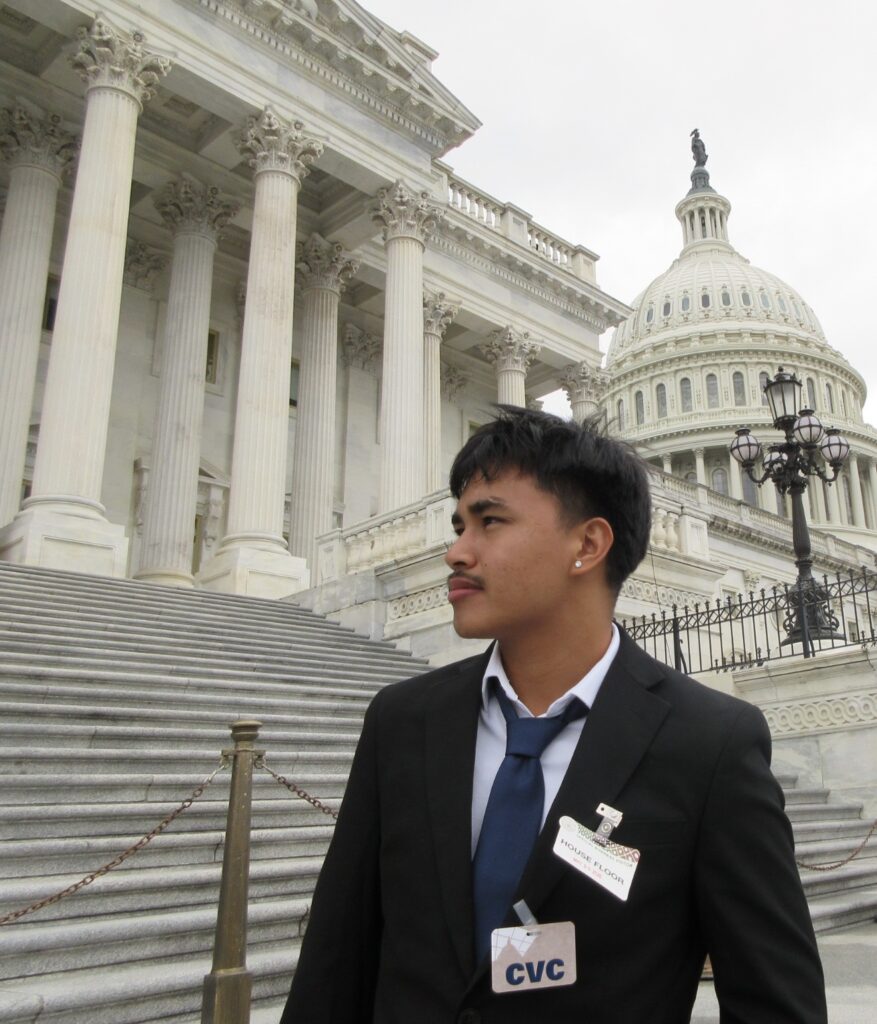
The Teagle Humanities Fellowship changed how I read, think, and understand myself. During the program, I read Hannah Arendt’s Eichmann in Jerusalem and Fyodor Dostoyevsky’s The Grand Inquisitor. Discussing these texts with my mentor prepared me for the difficult philosophical readings I later encountered in Soka University’s Core. Core is a seminar that introduces first-year students to enduring questions about human life through Eastern and Western philosophy. During the course, I read Confucius, Lao-Tzu, Plato, Aristotle, Immanuel Kant, and Epictetus, and I found myself applying what I learned from the Fellowship throughout Core.
My mentor introduced me to close reading, which is a method I was unfamiliar with. I learned to pay closer attention to specific words and patterns within a passage. I learned to question my initial interpretations and return to the text for more evidence and examine how individual details supported, complicated, or changed my understanding. I practiced this method throughout the Fellowship and I eventually carried it into Core.
Close reading had a significant impact on my writing. Many of my assignments focused on specific passages that I believed could be interpreted more deeply. I examined each philosopher’s choice of words, questioned what those words implied, and eventually developed my own interpretations. This process helped me strengthen my claims with evidence from the text.
On a more personal level, the Teagle Humanities Fellowship and my discussions with my mentor taught me the importance of critical thinking. I learned that we have an obligation to think critically about our actions, the authority we follow, and our true intentions. Arendt and Dostoevsky helped me understand this through different perspectives. Arendt warns about the evil that can occur when people fail to think critically. Reflecting on Eichmann, she writes, “It was sheer thoughtlessness—something by no means identical with stupidity—that predisposed him to become one of the greatest criminals of that period” (Arendt 134). Dostoyevsky’s Grand Inquisitor presents an opposing idea. He believes humanity can become happier by surrendering freedom to an institution that decides what people should believe and how they should live. He views freedom as a burden, stating that “nothing has ever been more unendurable to man and human society than freedom!” (Dostoyevsky 42). He believes people would prefer security and control.
Connecting these texts led me to think that the Grand Inquisitor’s ideal society could produce people similar to Eichmann. The Inquisitor imagines people who “must obey blindly, even in opposition to their consciousness” (Dostoyevsky 40). Arendt describes something similar in Eichmann, writing that “his inability to speak was closely connected with an inability to think, namely, to think from the standpoint of somebody else” (27). If an institution tells everyone what to believe, then people lose the responsibility of forming their own beliefs. Different opinions and perspectives challenge existing ideas. They create the possibility of reform and revolution, but a society filled with people who surrender their judgement to authority loses this possibility.
I made my strongest connection between the Fellowship and Core when I read Immanuel Kant. He defines enlightenment as humanity’s emergence from a self-imposed state of intellectual immaturity, which he describes as “the inability to use one’s own understanding without the guidance of another” (Kant 1). He urges people to “Sapere aude! [Dare to be wise!] Have courage to use your own understanding” (1). I immediately connected his ideas to Arendt’s and Dostoyevsky’s. The Grand Inquisitor wants people to surrender their freedom of thought, Eichmann is an example of the danger of thoughtlessness, and Kant argues that people have the responsibility to think for themselves.
All three philosophers had a profound impact on my life. I began examining the choices I make everyday. I realized that many of my interests are not genuine. People around me enjoy certain things, so I follow their lead and try to enjoy them too. My siblings and friends introduced me to nearly all the songs and books I claim to love. I enjoy volleyball and soccer, the same sports I watched my sister play growing up. Trends influence the clothes I buy and the things I want. Reputation and familial expectations also influence many of my decisions.
This realization made me question my identity. I do not know myself enough. I have spent a lot of my life learning what the people around me enjoy and what society considers acceptable or respectful. I know how I want others to see me, but I’ve spent less time discovering who I am without their influence. I began asking myself whether I do certain things because I genuinely enjoy them or because they help me appear to be a decent member of society. I began to wonder who I truly am.
I do not know who I am. The Teagle Humanities Fellowship disturbed my life in a positive way. Before the program, I thought of critical thinking as a skill, but all the readings I’ve encountered taught me that it’s more of an obligation. I have also become more conscious of the impermanence of life, which motivated me to seek a more meaningful life. I believe that process starts with discovering myself. I want to understand my flaws, strengths, weaknesses, interests, likes, and dislikes. I want to know which parts of myself I have chosen and which parts have been influenced by others. I may not completely separate myself from those influences, but I am conscious of them and I can decide what I want to carry forward.
Ultimately, I entered the Teagle Humanities Fellowship expecting to read philosophy, but it led me to self-reflection, questioning how I want to live. I still cannot answer “Who am I?” but I now dedicate my life to finding out.
Works Cited
Arendt, Hannah. Eichmann in Jerusalem: A Report on the Banality of Evil. Penguin Classics, 2006.
Dostoevsky, Fyodor. The Grand Inquisitor. Translated by David McDuff. Penguin, 1995.
Kant, Immanuel. “What Is Enlightenment?” Translated by Ted Humphrey. Hackett, 1992.